KG DefenseKurumsal Grup

Technology & standards Protection is engineering

A plate’s lay-up, its materials and the threat it is tested against: these decide what armor is worth in the field.

01 — Cutaway · plate architectures

Protection is a lay-up

Three hard-plate architectures: monolithic UHMWPE, the ceramic + PE hybrid and, for comparison, steel. Architecture, meaning strike-face hardness and backer toughness, matters more than thickness.

Hard plate, schematic lay-up view
Fig. 1.1 — Hard-plate lay-up · schematic, not to scale

01 / 03KG product

UHMWPE (PE)

Monolithic polyethylene · stand-alone

NIJ level NIJ III
UHMWPE (PE) — architecture properties
Test threat7.62×51 M80 Ball
Weight · SAPI1.5–1.9 kg
BuoyancyYes
AP protectionLimited
Multi-hitHigh
Temperature sensitivitySensitive above 70 °C
CostMedium
Best suited forNaval and air operations, special missions

Layers

  1. Monolithic UHMWPE — UD 0°/90° cross-plies
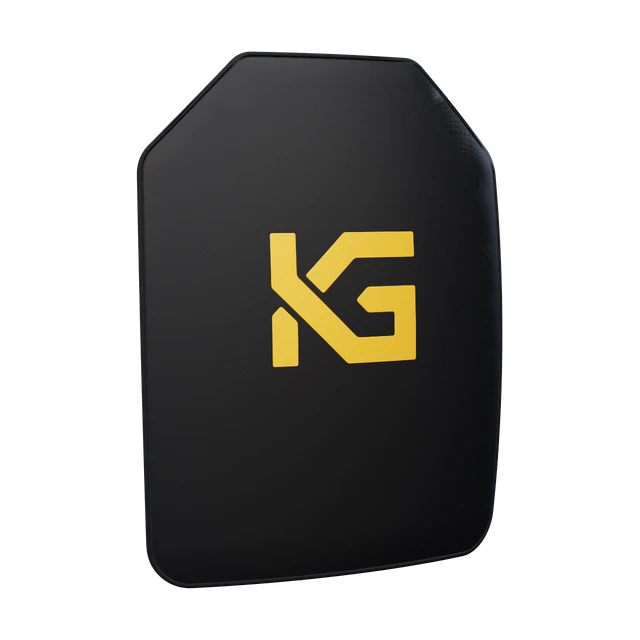
View the product — UHMWPE Hard Plate

02 / 03KG product

Ceramic + PE hybrid

Al2O3 / SiC strike face + UHMWPE backer

NIJ level NIJ IV
Ceramic + PE hybrid — architecture properties
Test threat.30-06 M2 AP
Weight · SAPI M2.7–3.1 kg
BuoyancyNo
AP protectionFull (.30-06 AP)
Multi-hitLimited (ceramic fractures)
Temperature sensitivityLow sensitivity
CostHigh
Best suited forLand combat units, high threat

Layers

  1. Ceramic strike face — Al2O3 / SiC (monolithic or mosaic/hex)
  2. UHMWPE backer — spreads energy along the fibers
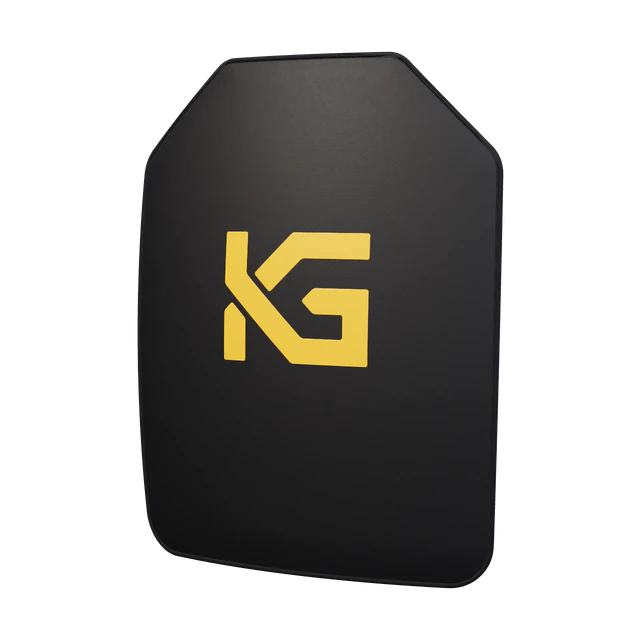
View the product — Ceramic + PE Plate

03 / 03Reference architecture

Steel (AR500 / AR550)

Reference architecture for comparison

NIJ level NIJ IIIreference
Steel (AR500 / AR550) — architecture properties
Test threat7.62×51 M80 Ball
Weight · SAPI M3.5–4.0 kg
BuoyancyNo (sinks)
AP protectionNo
Multi-hitSpall / ricochet risk
Temperature sensitivityNo sensitivity
CostLow
Best suited forFiring ranges, static protection, tight budgets

Layers

  1. Anti-spall coating — catches fragments
  2. AR500 / AR550 steel

Reference architecture for comparison — not part of the KG catalogue.

Steel throws fragments and ricochets as it deflects a round, which is why it is used with an anti-spall coating.

Weight comparison · PE: SAPI · hybrid and steel: SAPI M
  • PE 1.5–1.9 kg · SAPI
  • Hybrid 2.7–3.1 kg · SAPI M
  • Steel 3.5–4.0 kg · SAPI M

Gold mark: protection level stated in the KG product data sheet

02 — Materials science

Three materials, one system

Modern ballistic armor is never a single material: high-strength fibres and technical ceramics, each strongest against a different type of threat, work together.

UHMWPE

Ultra-high-molecular-weight polyethylene

A fiber lighter than water with very high tensile strength for its weight. Bullet energy travels along the fibers and spreads over a wide area.

UHMWPE — properties
Density0.97 g/cm³floats
Tenacity3.0–4.0 N/tex
Crystallinity> 95 %
ArchitectureUD prepreg · 0°/90°
UseNaval and air platforms, weight-critical armoring

Aramid

Para-aramid synthetic fiber

The standard for soft ballistic packs thanks to its high tensile strength. Not to be confused with meta-aramid, which is used for heat resistance.

Aramid — properties
Tensile strength~3.6 GPa
Areal density400–600 g/m²
WeavePlain · basket · 2×2 satin
Plies20–40 per pack
UseSoft armor panels, ballistic helmet shells

Technical ceramics

Al2O3 · SiC · B4C

The plate’s strike face: it breaks up the armor-piercing projectile first, then the backer spreads the energy. Ceramic is never armor on its own; it is always part of a composite system.

Technical ceramics — properties
Al2O33.7–3.9 g/cm³economical
SiC3.2 g/cm³strong against AP
B4C2.5 g/cm³lightest, hardest
ArchitectureMonolithic or mosaic/hex
UseNIJ III / IV hard plates, armor-piercing threats

Schematic texture — not a micrograph.

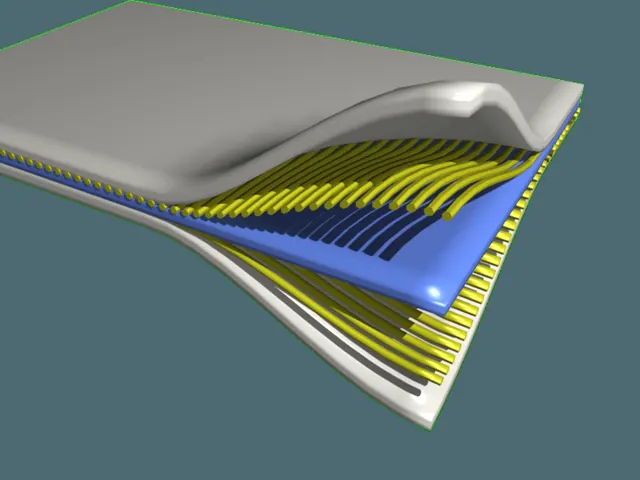
Composite lay-up, schematic visualisation

From material to system

Ceramic is never armor on its own; it is always part of a composite system. Fig. 2.1 — Composite lay-up · Schematic visualization · Gold mark: protection level stated in the KG product data sheet

03 — Threat rule · NIJ 0101.06

Each level’s reference round, velocity and energy

NIJ 0101.06 is a widely used reference edition for personal body armor (the newer 0101.07 names its levels differently). The rule shows one reference round per level; IIA–IIIA each specify two rounds. Choose a level: the reference round, its energy and the KG products rated at that level update together.

Energy rule · NIJ 0101.06 · 0–4,500 J

Table 3.1 — NIJ 0101.06 threat levels
Level Class Test round Mass (g) Mass (gr) Velocity (m/s) Energy (J) Typical use Rated KG products
NIJ IIA Handgun — light 9mm FMJ RN 8.0 124 373 557 Covert patrol None in the catalogue — special project
NIJ II Handgun — standard .357 Magnum JSP 10.2 158 436 969 Law enforcement
NIJ IIIA Handgun — heavy .44 Magnum SJHP 15.6 240 436 1,482 Soft armor, helmets
NIJ III Rifle — NATO ball 7.62×51 NATO M80 9.6 147 847 3,444 Hard plate (stand-alone)
NIJ IV Rifle — armor-piercing .30-06 M2 AP 10.8 166 878 4,151 Ceramic + PE hybrid plate

Gold mark — on the rule: the test energy the standard defines for the selected level’s reference round; next to products: the protection level stated in the KG product data sheet.

04 — Coverage matrix

A higher level does not cover everything

Each architecture is covered only at its rated level. A higher rating does not automatically document lower threats; lower levels must be confirmed by a test report.

Table 4.1 — NIJ level coverage by architecture
NIJ level Soft panel — Ballistic Vest product page NIJ IIIA · aramid UHMWPE plate — compare in the cutaway NIJ III Ceramic + PE — compare in the cutaway NIJ IV Steel — compare in the cutaway NIJ III · reference
IIA — show on the rule 9mm FMJ RN Lower levelconfirm by report Lower levelconfirm by report Lower levelconfirm by report Lower levelconfirm by report
II — show on the rule .357 Magnum JSP Lower levelconfirm by report Lower levelconfirm by report Lower levelconfirm by report Lower levelconfirm by report
IIIA — show on the rule .44 Magnum SJHP Coveredrated level Lower levelconfirm by report Lower levelconfirm by report Lower levelconfirm by report
III — show on the rule 7.62×51 NATO M80 Not covered Coveredrated level Lower levelconfirm by report Coveredrated level
IV — show on the rule .30-06 M2 AP Not covered Not covered Coveredrated level Not covered

05 — Errata

Common misconceptions

What buyers of body armor are often told — and what is actually true.

  1. NIJ IIIA — show on the rule

    Wrong“Aramid stops everything.”

    CorrectAramid is a soft ballistic material; it does not stop rifle rounds (especially armor-piercing) on its own. Rifle threats need a hard plate.

  2. NIJ III — show on the rule

    Wrong“NIJ III+ is an official level.”

    Correct“III+” is a manufacturer’s marketing label; it does not exist in the NIJ standard. Ask for the test round and the V50 velocity.

  3. General

    Wrong“Thicker means better protection.”

    CorrectArchitecture (strike-face hardness + backer toughness) matters more than thickness. The wrong lay-up cannot spread the energy.

  4. General

    Wrong“Armor lasts forever.”

    CorrectManufacturer warranties are usually time-limited. Soft armor is sensitive to moisture and sweat; UHMWPE loses performance if stored above 70 °C for long periods.

  5. General

    Wrong“Steel plates are the safest.”

    CorrectSpall/ricochet risk and weight are serious drawbacks versus composites: a steel NIJ III plate weighs 3.5–4.0 kg, its UHMWPE equivalent 1.5–1.9 kg.

  6. NIJ IV — show on the rule

    Wrong“NIJ IV automatically covers III.”

    CorrectThe NIJ IV test is a single .30-06 M2 AP shot. Multi-hit M80 performance must be verified separately.

06 — Platform standards

Platform protection is project work

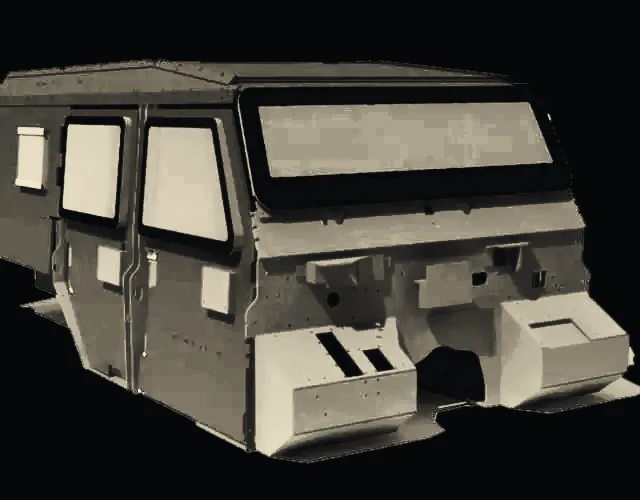
Beyond personal armor, vehicle, naval and aircraft armoring, as well as glazing, doors and visors, follow their own standards.

STANAG 4569 · AEP-55

NATO’s protection levels for vehicle occupants. Only the kinetic threat steps are shown here.

The level is set per project.

  1. Level 1 5.56×45 M193 / 7.62×51 Ball Distance 30 m
  2. Level 2 7.62×39 API BZ Distance 30 m Example family VAS-K LIGHTAEROARMOR A-2
  3. Level 3 7.62×51 AP (WC) Distance 30 m Example family NAVALARMOR M-3VAS-K MEDIUM
  4. Level 4 14.5×114 B32 API Distance 200 m Example family VAS-K HEAVY
  5. Level 5 25 mm APDS-T / APFSDS Distance 500 m
  6. Level 6 30 mm APFSDS / AP Distance 500 m

Glazing, door and vehicle standards

No equivalence tables are given; a product’s level is stated in the quote and the test report.

EN 1063

Ballistic glazing (BR1–BR7)

European standard that defines the bullet-resistance classes of security glazing and their test method.

Related productsBallistic Glass

EN 1522 / 1523

Ballistic doors, windows, panels

Classifies the bullet resistance of doors and windows (EN 1522) and sets the test method (EN 1523).

Related productsBallistic Door

VPAM

Vehicle and visor protection levels

Guidelines of the Germany-based association of test institutes, used as the reference for vehicle and visor protection levels.

Related productsVehicle ArmoringBallistic Visor

NIJ 0101.07 names its levels differently. The quote states which edition of the standard each product was tested to.

07 — Documents

Every level needs a document

Product data sheets and test reports are shared on request. Add the standard documents you need to your request list; they will be waiting in the quote form.

Reference standards

  • NIJ 0101.06Personal body armor: vests, plates, helmets
  • MIL-STD-662FV50 ballistic limit test method
  • STANAG 4569 · AEP-55Land, naval and air platform armoring
  • EN 1063Ballistic glazing (BR1–BR7)
  • EN 1522 / 1523Ballistic doors, windows, panels
  • VPAMVehicle and visor protection levels
  • NIJ 0117Bomb-disposal (EOD) protective suits

Contact

Need a mission-specific solution?

Share your threat level, weight target and use case; our engineering team will work out the right configuration with you.

Privacy notice

Data controller

KG Defense (Kurumsal Grup), Madenler Mah. Palandöken Cad. No:40, Ümraniye / Istanbul, Türkiye. Contact: info@kgsavunma.com

Data processed

The name, e-mail, phone, organization, country and request details you share in the contact and quote form.

Purpose

To answer your information and quote requests, to contact you and to handle the related business process.

Legal basis

Your explicit consent; processing being directly related to the conclusion or performance of a contract; and our legitimate interest (Turkish Personal Data Protection Law No. 6698, art. 5/2(c) and (f)).

Transfers

Your data is shared only as far as needed to answer your request, with authorized persons including e-mail infrastructure providers.

Retention

Kept for the periods required by law after your request is concluded, then deleted or anonymized.

Information in your browser

Your request list and unfinished form draft are kept only in your own browser (local storage); they do not reach us unless you send them, and you can delete them at any time.

Your rights

Under article 11 of Law No. 6698 you may ask whether your data is processed, request information, correction, deletion and object. Send requests to info@kgsavunma.com.