Frequently asked questions Choosing the right armor
The most common questions on choosing, caring for and procuring ballistic protection.
Questions and answers
Asked before you buy
Answers are for general information; binding values are given in the product data sheet and test reports.
Standards
Which test rounds do the NIJ levels define?
What counts is the NIJ level stated in the product data sheet. In NIJ 0101.06, levels II and IIIA are each tested with two rounds (II: 9 mm and .357 Magnum; IIIA: .357 SIG and .44 Magnum). The table shows one reference round and velocity per level:
| Level | Test round | Velocity |
|---|---|---|
| IIA | 9mm FMJ RN | 373 m/s |
| II | .357 Magnum JSP | 436 m/s |
| IIIA | .44 Magnum SJHP | 436 m/s |
| III | 7.62×51 NATO M80 | 847 m/s |
| IV | .30-06 M2 AP | 878 m/s |
Avoid products with no stated level; “III+” is not an official NIJ level.
Service life
How long does a plate last, and when should it be replaced?
The warranty period is stated in the product data sheet. Soft armor packs are more sensitive to moisture and sweat; UHMWPE plates lose performance if stored above 70 °C for long periods (for example in a car trunk in summer).
A visual check is not enough after an impact or a drop: if in doubt, send the item to the manufacturer for inspection. Every piece of armor should carry its production date and serial number.
Selection
What is the difference between stand-alone and ICW plates?
A stand-alone plate is rated against the stated test threat on its own. An ICW (In-Conjunction-With) plate is rated only together with an NIJ IIIA soft ballistic panel. The distinction must be written into the procurement specification.
Stand-alone plates are preferred for special missions where speed comes first; in a conventional military configuration, vest, plate and soft panel are used together as an ICW system.
Selection
Should I choose a PE plate or a ceramic plate?
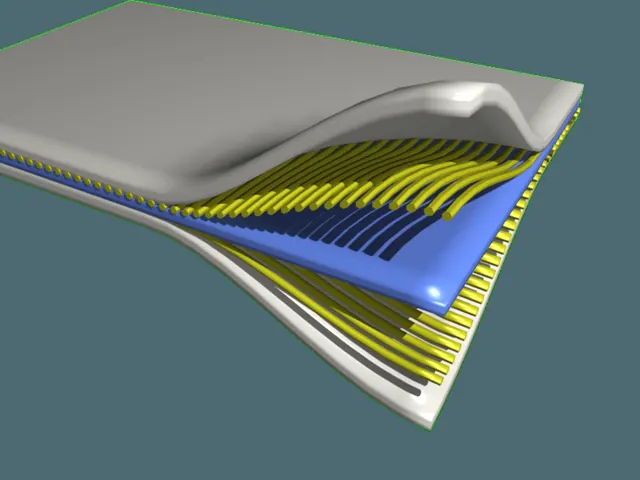
The rule of thumb: a UHMWPE (PE) plate is rated at NIJ III (7.62×51 M80 Ball); it is light (1.5–1.9 kg), floats and suits naval and air operations. A ceramic + PE hybrid plate is rated at NIJ IV (.30-06 M2 AP, armor-piercing); it is heavier (2.7–3.1 kg).
The choice comes down to the threat profile, mission duration and mobility priority.
UHMWPE Hard PlateCeramic + PE PlateCompare the architectures
Standards
What does “III+” mean?
There is no official “III+” level in NIJ 0101.06. It is a manufacturer’s marketing label, usually meaning a plate between III and IV that was tested against a specific additional threat (for example 5.56 M855 steel-core ammunition). Always ask for the test round and the V₅₀ velocity.
Custom sizes
Can I order custom-sized plates or vests?
Yes. Our engineering team designs for specific threat profiles, anatomy (women’s, L and XL sizes) and garment integration. Minimum quantity and customization approach are set per project.
Vehicle armoring
What do the B and VR levels in vehicle armoring mean?
They belong to different standards and do not translate one-to-one. B levels are based on European EN standards: EN 1063 classifies ballistic glazing (BR1–BR7), while EN 1522/1523 covers doors, windows and panels. VR levels belong to the VPAM vehicle-protection scale. The same number can stand for a different threat on a different scale.
The level is set for each project from a threat analysis, and the relevant test report is what governs. Our vehicle armoring covers the range B4–B7 · VR7–VR9, set per project.
Export
How do exports and licensing work?
Requests from outside Türkiye are evaluated. Exports are subject to licensing in Türkiye by the Presidency of Defense Industries (SSB) and, where required, the Ministry of Foreign Affairs; the end-user certificate (EUC) and import-country requirements are handled per project.